The Jurassic Period: Dinosaurs, Climate, and Geography Explained
Discover the wonders of the Jurassic Period, a golden age of dinosaurs defined by lush landscapes, shifting continents, and a warm, humid climate.
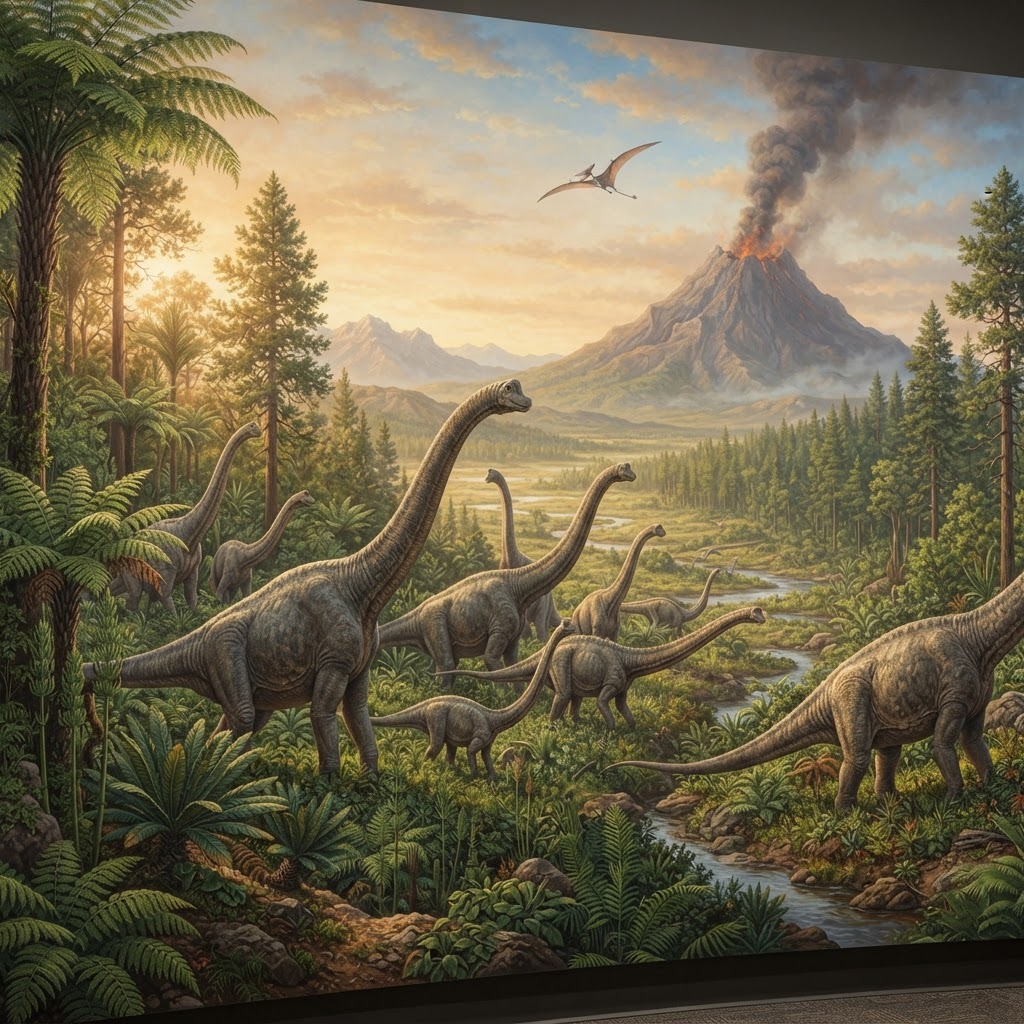
Introduction to the Jurassic Period
The Jurassic Period, spanning approximately 201.3 to 145 million years ago, is perhaps the most famous chapter in Earth's history. As the middle period of the Mesozoic Era, it serves as a bridge between the Triassic and the Cretaceous. Named after the Jura Mountains on the border of France and Switzerland where its rocks were first studied, this era is synonymous with the rise of the giants. It was a time when dinosaurs truly began to dominate the terrestrial landscape, evolving from small, bipedal forms into the massive, awe-inspiring creatures that capture our imaginations today.
A World in Motion: Geography
During the Jurassic, the Earth looked vastly different than it does today. The supercontinent Pangaea, which had held most of the world's landmasses together, began to rift apart. This massive geological shift split the land into two major continents: Laurasia in the north and Gondwana in the south. This separation created new coastlines and shallow seaways, which significantly influenced the distribution of life. As the continents drifted, the formation of new ocean basins began to reshape the global map, setting the stage for the diverse ecosystems that would define the later Mesozoic.
Climate: A Warm and Humid Greenhouse
Unlike our modern world, the Jurassic Period was characterized by a warm, humid, and subtropical climate. There were no polar ice caps, allowing forests to grow even in high-latitude regions near the poles. This global greenhouse effect created a stable, lush environment. The abundance of moisture and warmth supported vast, dense forests of ferns, cycads, and conifers, providing an endless food supply for the massive herbivores that roamed the land.
The Golden Age of Dinosaurs
While dinosaurs existed in the Triassic, the Jurassic was their true "golden age." This period saw a massive radiation of dinosaur species.
The Rise of the Giants
This era is famous for the sauropods—the long-necked, long-tailed giants like Mamenchisaurus. These herbivores grew to incredible sizes, feeding on the lush vegetation of the Jurassic forests. Their sheer scale was an evolutionary response to the need for efficient digestion of tough plant material.
Predators and Skies
While giants grazed, smaller but vicious carnivores stalked the landscape. The oceans were equally vibrant, dominated by marine reptiles like the dolphin-like ichthyosaurs and the long-necked plesiosaurs. Above the waves, the skies were claimed by pterosaurs, while the first birds began to make their appearance, marking a pivotal moment in the history of vertebrate flight.
Frequently Asked Questions
How long did the Jurassic Period last?
The Jurassic Period lasted for approximately 56 million years, beginning about 201.3 million years ago and ending around 145 million years ago.
Was the climate the same everywhere during the Jurassic?
While the climate was generally warm and humid globally, there were variations. Large arid expanses existed in some lower latitudes, but the lack of ice caps meant that even high-latitude regions were significantly warmer than they are today.
Why is it called the "Jurassic"?
The period is named after the Jura Mountains on the border between France and Switzerland, where limestone strata from this geological time were first identified and studied by early geologists.
Did humans live during the Jurassic?
No. Dinosaurs went extinct approximately 66 million years ago, while the earliest ancestors of humans did not appear until millions of years later. The two groups never coexisted.