Megalodon Teeth: How to Spot a Real One and What They're Worth
Discover how to identify an authentic Megalodon tooth, avoid common fakes, and understand the factors that determine their market value.
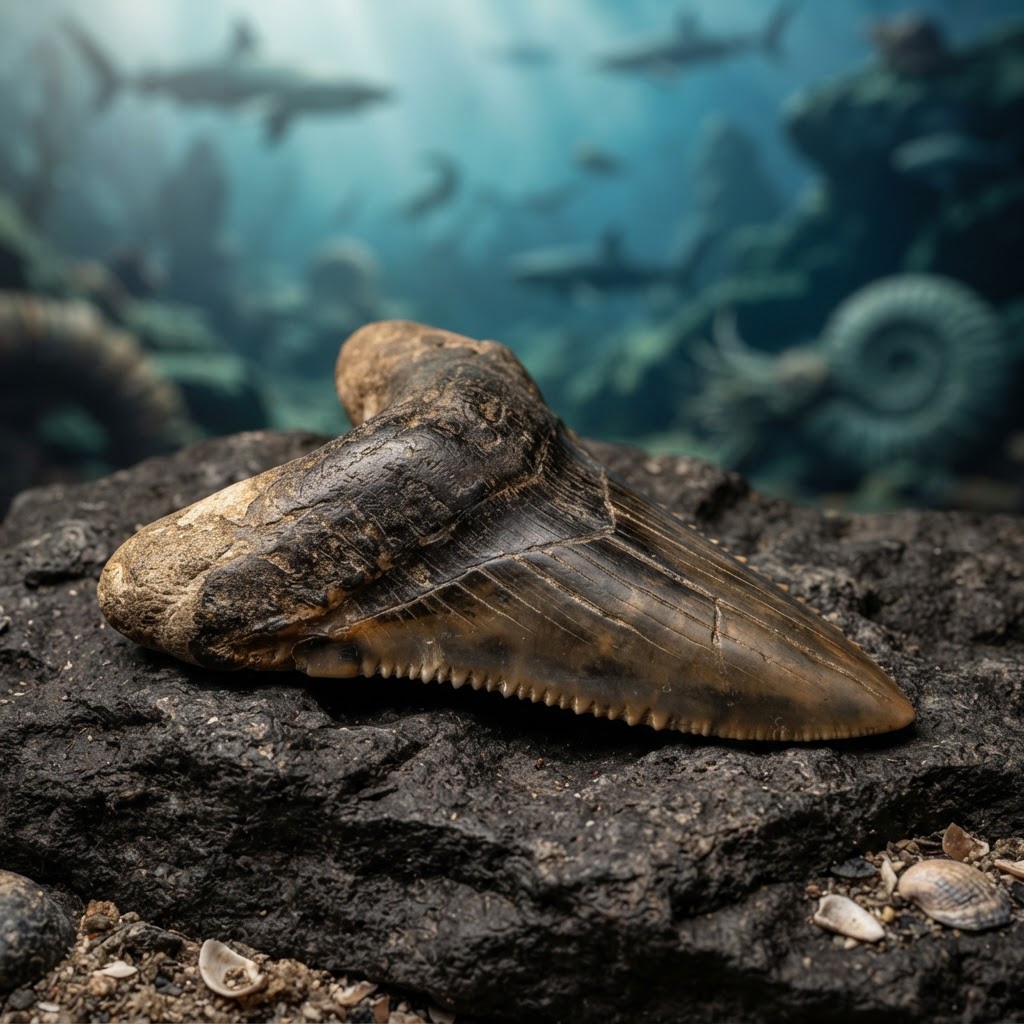
The Legend of the Megalodon
The Otodus megalodon was the largest shark to ever roam the oceans, reaching lengths of up to 60 feet [1]. Because sharks have skeletons made of cartilage rather than bone, their teeth are often the only remnants left behind after millions of years [3]. These massive, serrated teeth are highly prized by collectors, but with high demand comes a market flooded with replicas and heavily restored specimens [6, 8]. Whether you are a budding fossil hunter or looking to invest, knowing how to distinguish a genuine fossil from a fake is essential [4, 9].
How to Identify a Real Megalodon Tooth
Authenticating a fossil requires a keen eye for detail. Here are the primary features to inspect:
1. Size and Shape
Authentic Megalodon teeth are significantly larger than those of modern sharks. While a Great White shark tooth typically measures 1–3 inches, a Megalodon tooth usually ranges from 3 to 7 inches [1, 5]. They are broadly triangular with a wide base and sharp, serrated edges [1, 5].
2. Weight and Texture
Due to the natural process of mineralization over millions of years, real Megalodon teeth are dense and heavy [1, 4]. If a tooth feels unusually lightweight or plastic-like, it is likely a replica [1]. Additionally, look for natural imperfections—pits, scratches, and subtle irregularities are signs of a genuine fossil that has weathered the ages [4].
3. Coloration and Root
In authentic specimens, you will often see a distinct difference in color between the crown (the enamel portion) and the root [1]. The root often appears lighter, ranging from tan to reddish-brown, while the crown may be darker [1].
Understanding Market Value
The value of a Megalodon tooth is not determined by size alone; condition is king [2, 10]. A 6-inch tooth with a broken tip or heavy restoration will be worth significantly less than a pristine 5-inch specimen [2, 7].
- 2–3 inches: $30–$150 [6, 10]
- 4–5 inches: $200–$1,500 [6, 10]
- 6+ inches: $1,000–$15,000+ [6, 10]
Factors like the quality of the serrations, the presence of the bourrelet (the band between the enamel and root), and the overall preservation of the enamel play a massive role in the final price [2, 7, 10].
Avoiding Scams
To protect your investment, always buy from reputable dealers who provide certificates of authenticity [6, 10]. Be wary of "too perfect" teeth or prices that seem too good to be true [6, 9]. If you are unsure, consider using professional identification tools or consulting with experts to verify the specimen's provenance [1, 7].
Frequently Asked Questions
How can I tell if a tooth is fake?
Look for signs of modern manufacturing, such as lightweight materials, perfect symmetry that looks "too good," or visible seams from a mold. Always check for natural mineralized weight and authentic surface wear [1, 4, 6].
Does UV light help identify fossils?
Yes, UV testing is a non-invasive technique that can help reveal repairs or synthetic materials that do not fluoresce the same way as natural, mineralized fossil enamel [3].
What is the most important factor for value?
While size is the most obvious factor, condition is the true value booster. A smaller, perfectly preserved tooth is often more valuable than a larger, heavily damaged or poorly restored one [2, 6, 10].