Unlocking the Past: How Ammonites Reveal the Secrets of Ancient Seas
Discover the fascinating process of ammonite fossilization and learn how these spiral-shelled creatures act as time capsules for Earth's prehistoric oceans.
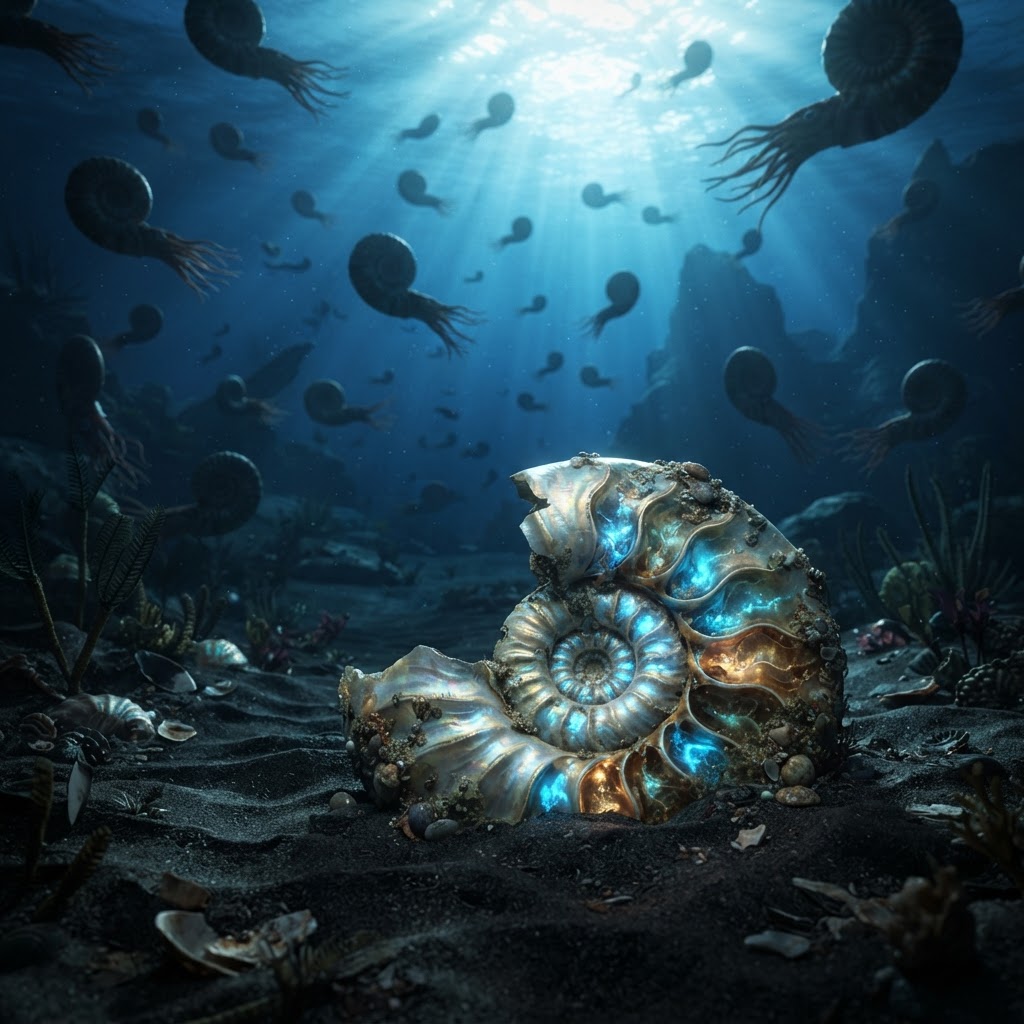
Unlocking the Past: How Ammonites Reveal the Secrets of Ancient Seas
Imagine walking along a windswept coastline and spotting a perfect, stony spiral peeking out from the shale. This is an ammonite, one of the most iconic and recognizable fossils in the world. For millions of years, these marine predators dominated the oceans, and today, their remains serve as vital clues for scientists piecing together the history of our planet. In this guide, we will explore the incredible journey of how these creatures lived, how they became stone, and the secrets they still hold about the ancient world.
The Living Ammonite: More Than Just a Shell
To understand the fossil, we must first understand the animal. Ammonites belonged to the class Cephalopoda, making them ancient relatives of today’s squids, octopuses, and cuttlefish. While they look remarkably like the modern Chambered Nautilus, biological evidence suggests they are actually more closely related to the soft-bodied coleoids (squids and octopuses).
Anatomy of a Prehistoric Hunter
Ammonites first appeared in the fossil record about 416 million years ago during the Devonian Period. They possessed a multi-chambered shell that they used for protection and buoyancy. The animal lived only in the outermost, largest chamber. The internal chambers, known as the phragmocone, were connected by a tube called a siphuncle. By regulating the amount of gas and fluid in these chambers, the ammonite could move up and down through the water column, much like a modern submarine.
A World of Diversity
Over the course of 350 million years, ammonites evolved into thousands of different species. They ranged in size from tiny shells no larger than a penny to the massive Parapuzosia seppenradensis, which could reach over six feet in diameter. Their shells weren't just simple coils; some were loosely wound, others were straight (orthoconic), and some even resembled tangled knots (heteromorphs).
The Journey to Fossilization: How Ammonites Formed
Fossilization is a rare and lucky event. Most ammonites that died were eaten or crushed by the weight of the sea. However, those that settled into the soft, oxygen-poor mud of the seafloor had a chance at immortality. This process, known as permineralization, is how we get the beautiful specimens found today.
Step 1: Burial and Decay
When an ammonite died, its soft body would quickly decay or be scavenged. The empty shell would sink to the bottom of the ocean and be covered by layers of sediment like silt or clay. Rapid burial is key, as it protects the shell from being broken by waves or currents.
Step 2: Mineralization
Over millions of years, more layers of sediment would pile on top, creating immense pressure. Groundwater, rich in dissolved minerals, would seep through the porous sediment and into the hollow chambers of the shell. These minerals—typically calcite, silica, or pyrite—would slowly crystallize, filling the empty spaces and replacing the original aragonite of the shell.
Step 3: The Rainbow in the Rock
In some rare cases, the original nacre (mother-of-pearl) of the shell is preserved. This results in 'Ammolite,' an organic gemstone that flashes with iridescent reds, greens, and blues. In other environments, iron-rich water might turn the fossil into 'fool’s gold,' creating a stunning pyritized ammonite that shines like polished brass.
What Ammonites Reveal About Ancient Oceans
Ammonites are more than just beautiful collectibles; they are 'index fossils.' Because they evolved rapidly and were spread across the globe, they are used by geologists to date the layers of rock in which they are found. If you find the same species of ammonite in England and in the United States, you know those rock layers were formed at the exact same time.
Clues to Water Depth and Temperature
The structure of an ammonite’s shell tells us about the environment it lived in. By studying the 'suture lines'—the complex patterns where the internal walls (septa) join the outer shell—scientists can estimate how deep the animal could dive. More complex, intricate sutures often allowed the shell to withstand higher water pressure in deeper seas.
Furthermore, by performing chemical analysis on the minerals within the shell, paleontologists can determine the temperature and salt content of the ancient ocean. Oxygen isotope analysis acts as a prehistoric thermometer, telling us whether the ammonite lived during a period of global warming or cooling.
Tracing Mass Extinctions
Ammonites survived several major mass extinctions, but they were eventually wiped out by the same event that killed the dinosaurs: the Cretaceous-Paleogene (K-Pg) extinction about 66 million years ago. By studying the decline of ammonite diversity leading up to this event, scientists gain insights into how ecosystems collapse and recover during planetary crises.
Conclusion
The next time you hold an ammonite fossil, remember that you are holding a record of a world long gone. From their complex buoyancy systems to the chemical signatures locked in their stone chambers, these spirals provide a window into 350 million years of Earth's history. They remind us that the oceans have always been a place of wonder, change, and incredible resilience.
FAQ
Are ammonites related to snails?
No. While they have coiled shells, ammonites are cephalopods, making them more closely related to octopuses and squids. Snails are gastropods, which have a completely different biological structure and evolutionary path.
Why are some ammonite fossils golden?
This is due to a process called pyritization. If the ammonite was buried in an environment rich in iron sulfates (like deep-sea mud), the mineral pyrite (fool's gold) would replace the shell material, giving it a metallic, golden appearance.
How can I tell how old an ammonite fossil is?
Age is determined by the species of the ammonite and the geological formation where it was found. Most common ammonite fossils found by collectors date to the Jurassic or Cretaceous periods, ranging from 200 to 66 million years old.
Did ammonites have eyes?
Yes. As active marine predators, living ammonites had well-developed eyes, similar to those of a modern squid or nautilus, which they used to hunt small fish and crustaceans in the ancient seas.