Green River Formation: The Eocene's Preservation Masterpiece
Discover the Green River Formation, a world-renowned fossil site in the American West that offers an unparalleled window into life during the Eocene epoch.
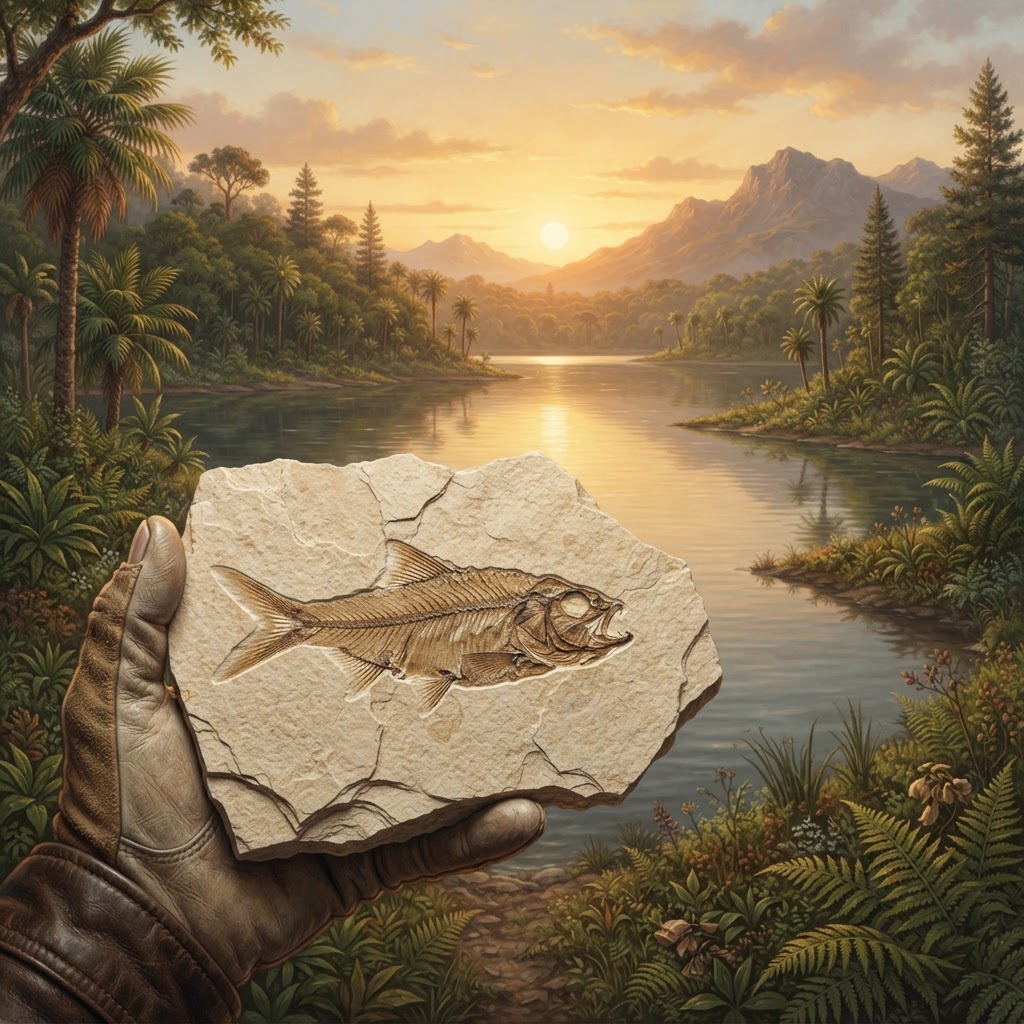
A Window Into the Eocene
The Green River Formation is widely considered one of the most significant paleontological sites on Earth. Spanning parts of Wyoming, Utah, and Colorado, this geological treasure trove provides a remarkably clear, continuous record of life from the Early Eocene epoch, roughly 53.5 to 48.5 million years ago [3, 7]. Unlike many fossil sites that offer only fragmented glimpses of the past, the Green River Formation acts as a "preservation masterpiece," capturing everything from delicate insects and leaves to complete vertebrate skeletons in exquisite detail [6, 7].
The Science of the Lakes
During the Eocene, the region was not the arid landscape we see today. Instead, it was home to a series of vast, interconnected intermountain lakes: Fossil Lake, Lake Gosiute, and Lake Uinta [2, 7]. These lakes created the perfect conditions for fossilization.
The Magic of Varves
One of the most fascinating aspects of this formation is the presence of "varves" [2, 8]. These are fine, alternating layers of sediment—a dark layer formed during the growing season and a lighter, inorganic layer deposited during the dry season [2]. Each pair of layers represents a single year, allowing scientists to count back through time with incredible precision [2, 8]. This rhythmic sedimentation, combined with low-oxygen conditions at the lake bottoms, prevented scavengers from disturbing carcasses, leading to the exceptional preservation that defines the site as a Konservat-Lagerstätte [7].
What Can You Find?
The biodiversity preserved in the Green River Formation is staggering. While it is most famous for its millions of fish fossils—such as the iconic Knightia—the site has yielded a diverse array of life [4, 7]. Paleontologists and collectors have uncovered:
- Vertebrates: Including birds (some resembling modern flamingos), reptiles, amphibians, and various mammals [6, 7].
- Flora: Perfectly preserved leaves, seeds, and flowers that tell us about the lush, temperate forests that once surrounded the lakes [3, 9].
- Insects: Delicate wings and bodies that are rarely found in the fossil record [9].
FAQ: Frequently Asked Questions
Where is the best place to see these fossils?
Fossil Butte National Monument in Wyoming is a premier location for viewing these fossils in their natural context, as it sits within the ancient boundaries of Fossil Lake [2, 8].
Why are the fossils so well-preserved?
The combination of fine-grained limestone, mudstone, and siltstone, along with anoxic (low-oxygen) lake-bottom conditions, prevented decay and scavenging, allowing for the preservation of soft tissues and delicate structures [3, 7].
Can I collect my own fossils?
Yes, there are legal, commercial quarries in the region where collectors can pay a fee to dig for their own specimens, which has contributed significantly to the number of fossils available in public and private collections worldwide [4].
How long did these lakes exist?
The Green River lake system spanned approximately 5 million years, providing a long-term record of environmental and biological change during the Eocene [3, 7].