Decoding Ammonite Sutures: Nature's Intricate Fossil Patterns
Discover the secrets behind the mesmerizing, leaf-like patterns on ammonite fossils and learn how these 'sutures' reveal the history of ancient oceans.
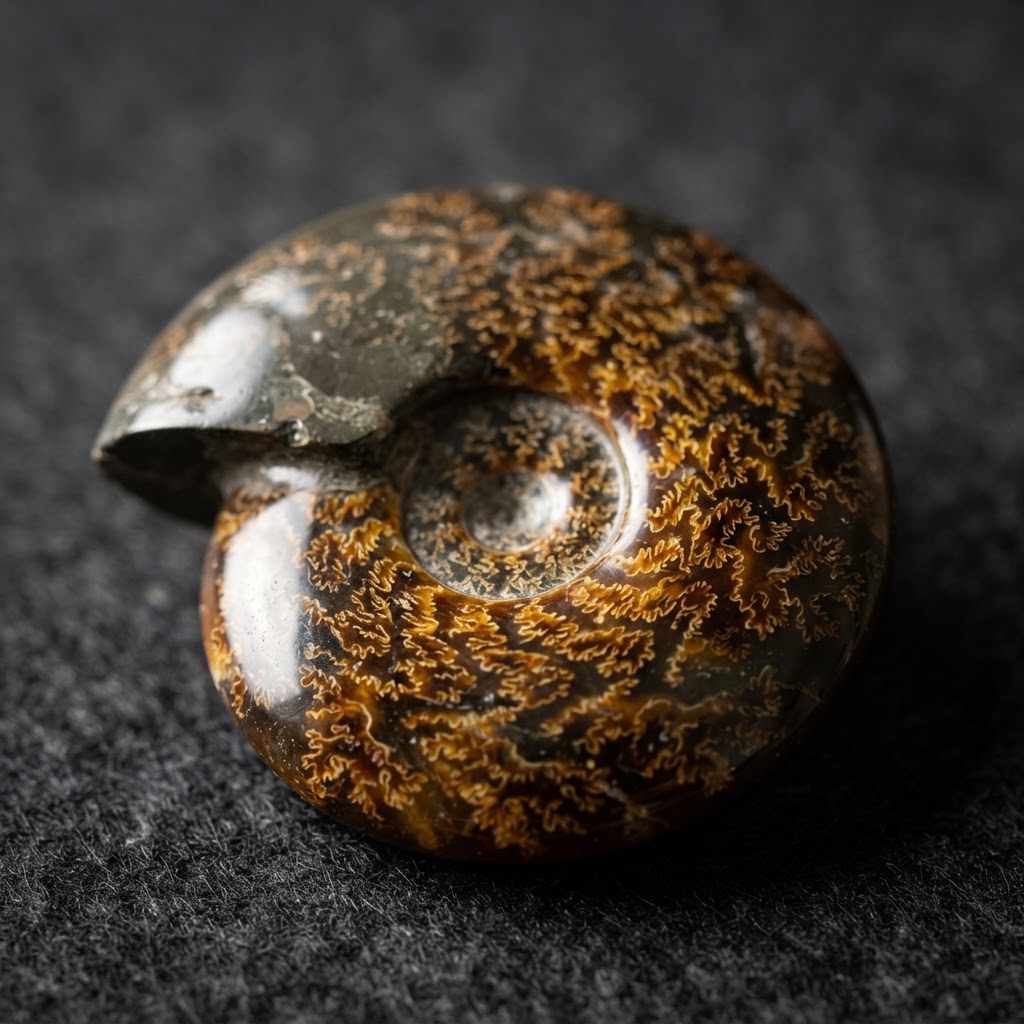
What Are Ammonite Sutures?
If you have ever held an ammonite fossil, you may have noticed beautiful, wavy, or leaf-like lines etched across its surface. These are not merely decorative; they are known as suture lines. In paleontology, a suture is the contact point where the internal chamber walls—called septa—meet the outer shell wall. Because the soft body of the ammonite is rarely preserved, these lines serve as a vital map, revealing the internal architecture of a creature that dominated the Mesozoic seas for millions of years.
The Anatomy of a Suture
To understand sutures, you must visualize the ammonite’s shell as a series of chambers. As the animal grew, it added new, larger chambers to its shell. The septa acted as structural dividers between these chambers. Where these dividers touched the outer shell, they created a line.
These lines are categorized by two main features:
- Lobes: The parts of the suture that point away from the shell opening (the aperture).
- Saddles: The parts of the suture that curve toward the shell opening.
The Three Main Suture Types
Over millions of years, ammonite sutures evolved from simple curves to incredibly complex, fractal-like patterns. Paleontologists classify them into three primary groups:
1. Goniatitic
Found in earlier forms, these sutures feature simple, undivided lobes and saddles. They look like gentle, rounded waves.
2. Ceratitic
These represent an intermediate stage. Here, the lobes begin to show small, tooth-like subdivisions, while the saddles remain smooth and rounded.
3. Ammonitic
This is the most complex form, common in Jurassic and Cretaceous species. Both the lobes and the saddles are highly subdivided, creating intricate, fern-like patterns that are highly prized by collectors.
Why Did They Evolve Such Complexity?
While the exact purpose remains a subject of scientific debate, many researchers believe these complex folds provided structural integrity. By increasing the surface area where the septa met the shell, the ammonite could create a stronger, more crush-resistant shell, allowing it to dive deeper into the water column without the shell collapsing under pressure. Additionally, these chambers helped the animal regulate its buoyancy, acting like a submarine's ballast tanks.
FAQ: Frequently Asked Questions
Are suture lines visible on all ammonite fossils?
Not always. Sutures are often hidden beneath the outer shell layer. They are most visible on fossils that have been weathered by nature or carefully polished by a collector to reveal the internal structure.
Can I tell how old a fossil is by its sutures?
Yes! Because suture complexity generally increased over time, paleontologists use these patterns as a "biostratigraphic tool" to help date the rock layers in which the fossils are found.
Why are they called 'sutures'?
The term comes from the Latin sutura, meaning "seam." Just as a seam joins two pieces of fabric, these lines mark the "seam" where the internal wall meets the outer shell.
Do modern nautiluses have these patterns?
Modern nautiluses are distant relatives of ammonites, but they have very simple, straight suture lines. They never evolved the complex, folded septa seen in the extinct ammonite lineage.